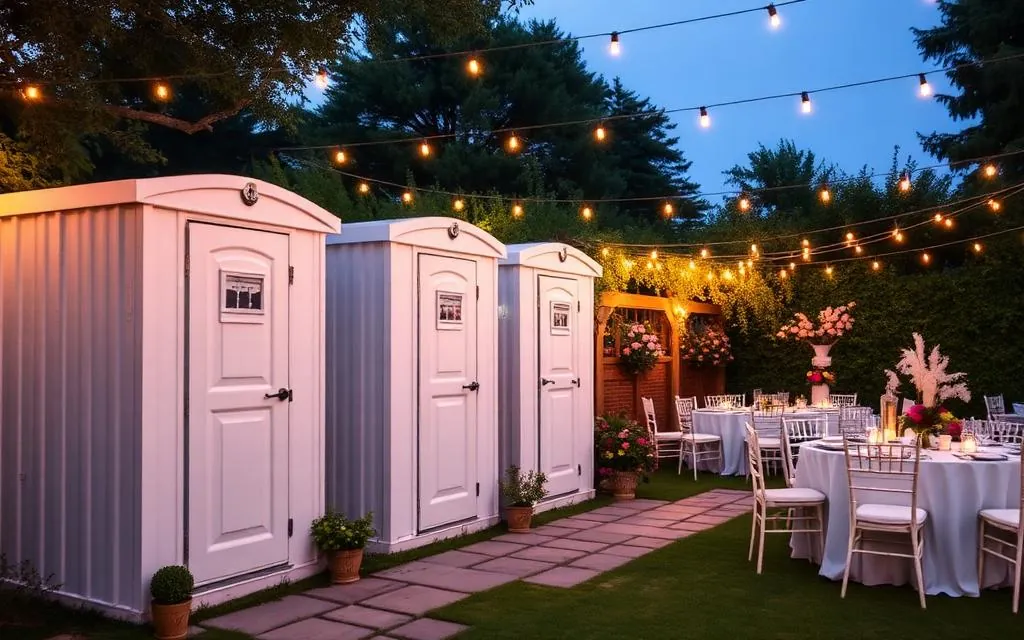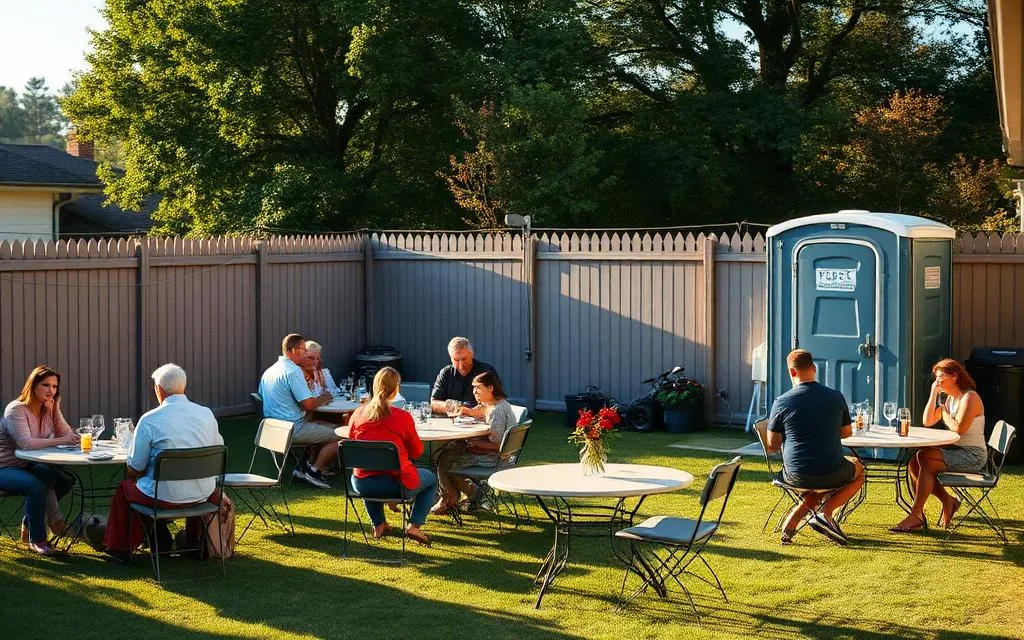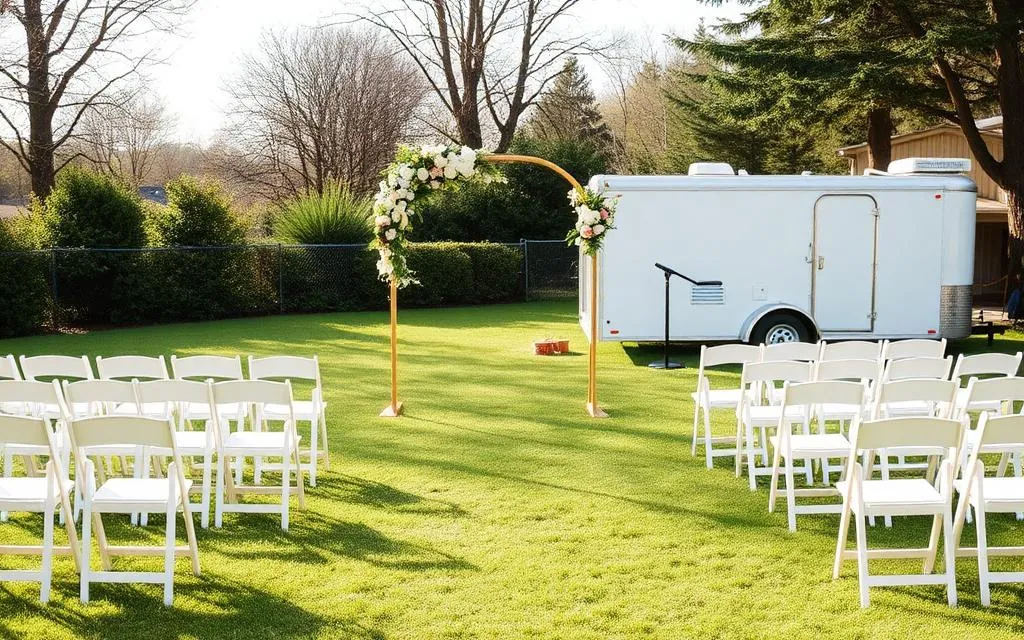
Outdoor weddings at barns, acreages, and private venues almost always need restrooms brought in, and thoughtful planning keeps them invisible in the best way.
Choosing your unit type
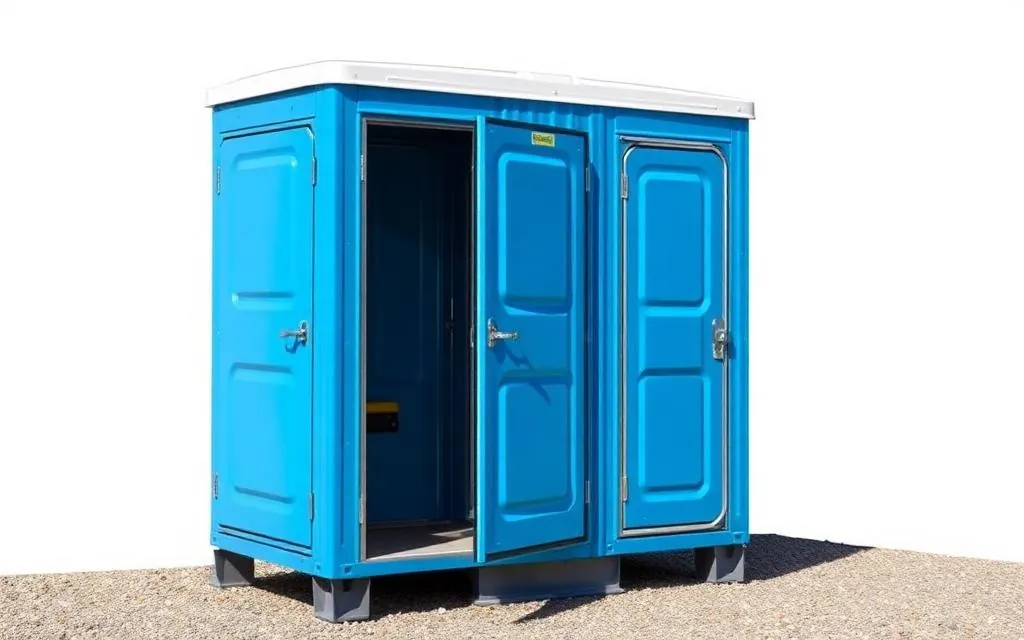
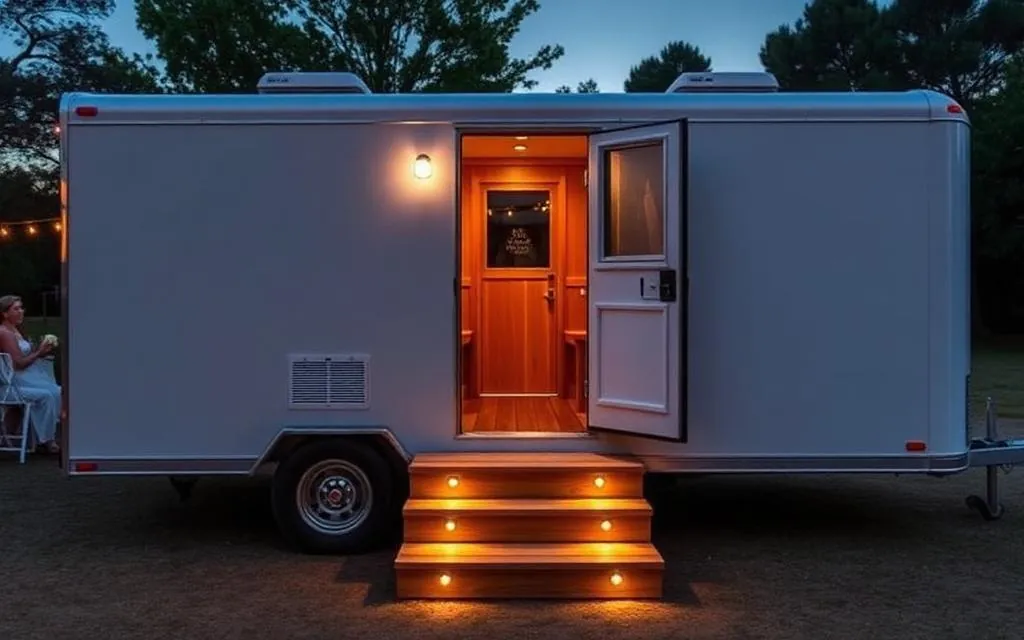
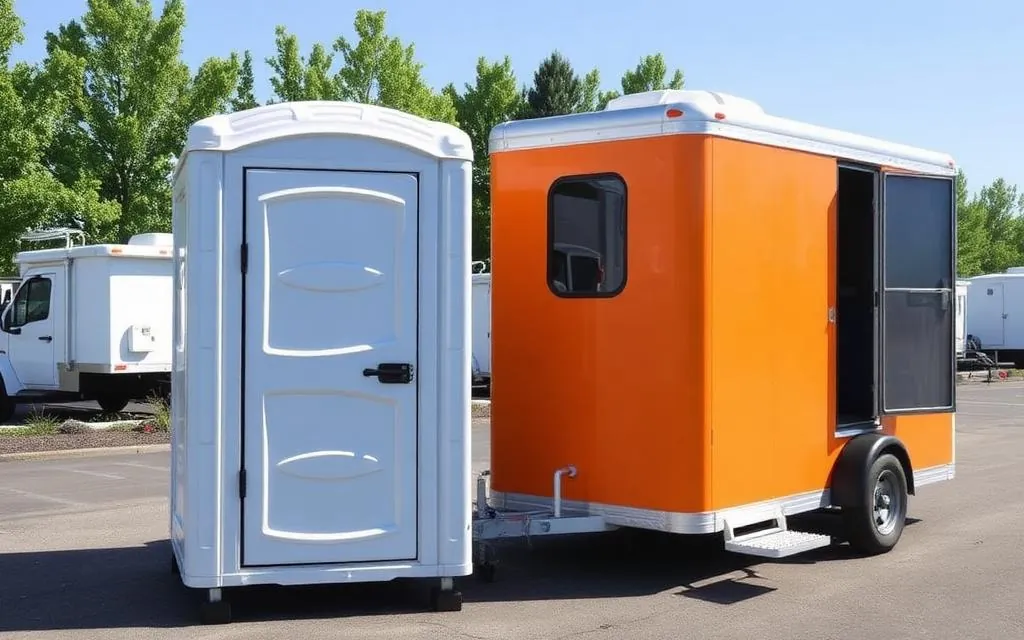
Luxury restroom trailers give guests interior lighting, running water, mirrors, and a finished space that suits formal attire. Standard units are the practical, budget-friendly choice for vendors, setup crews, and overflow capacity.
Many couples use both: a trailer for guests and a standard unit tucked near the vendor area.
Matching the unit to the venue
A barn or acreage wedding with no indoor plumbing nearby leans heavily on restroom rentals for the entire day, which usually makes a luxury trailer worth the investment for guest comfort. A venue with existing indoor restrooms but limited capacity for a larger guest list might only need a standard unit or two as overflow, so the crowd never backs up waiting for one shared bathroom.
Thinking beyond the ceremony
Consider the whole day, not just the ceremony. A reception that runs into the evening with dancing, a bar, and a long guest list puts more demand on restrooms than the ceremony itself, so plan capacity around the longest and busiest stretch of the day rather than the shortest one.
Placement and timing
- Pick a spot that is a short walk from the reception but out of ceremony sight lines and photo backdrops.
- Confirm the ground is firm and level enough for safe delivery and leveling.
- Plan a lit path for evening receptions.
- Schedule delivery before decor and vendors arrive so nothing has to be moved twice.
- Coordinate with your venue coordinator or planner on exact placement, since they often know the property's access points and problem areas better than a first-time visitor would.
- Consider screening, such as a simple fence panel or greenery, if the unit needs to sit somewhere more visible than ideal.
A sample wedding day timeline
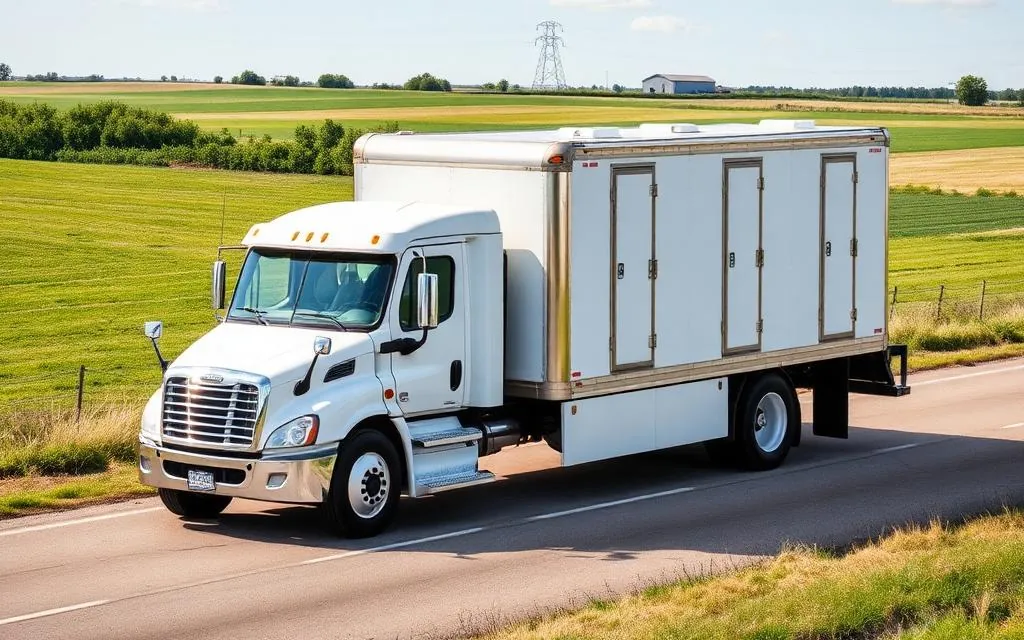
For a Saturday wedding, delivery the day before gives everything time to be leveled, tested, and out of the way before florists, caterers, and rental companies arrive to set up. Units are typically picked up the following day or on a schedule the couple sets in advance, which means the wedding party never has to think about it once the day itself begins.
Capacity for a wedding
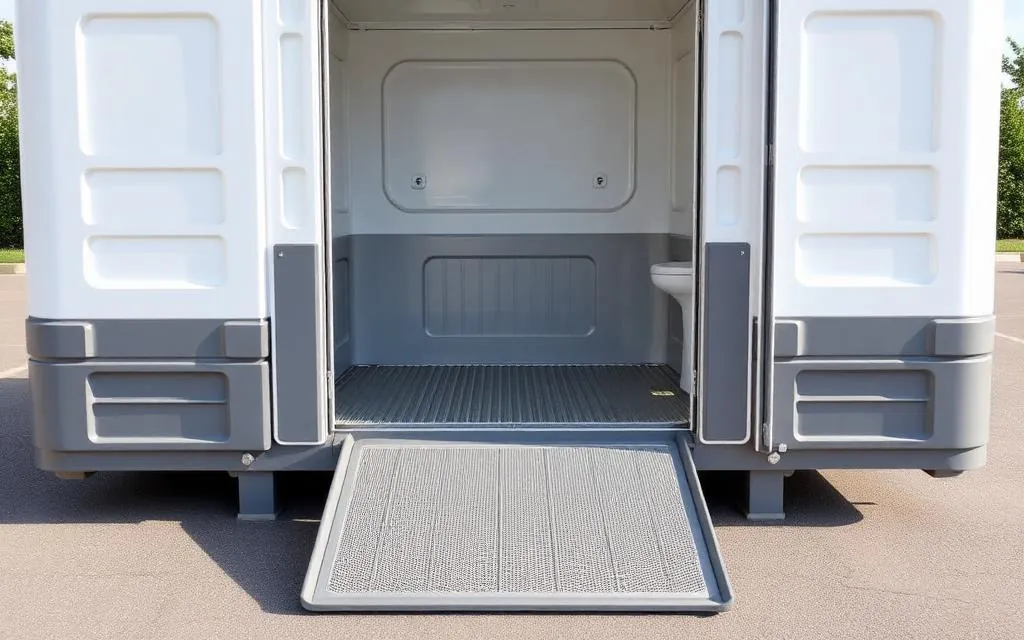
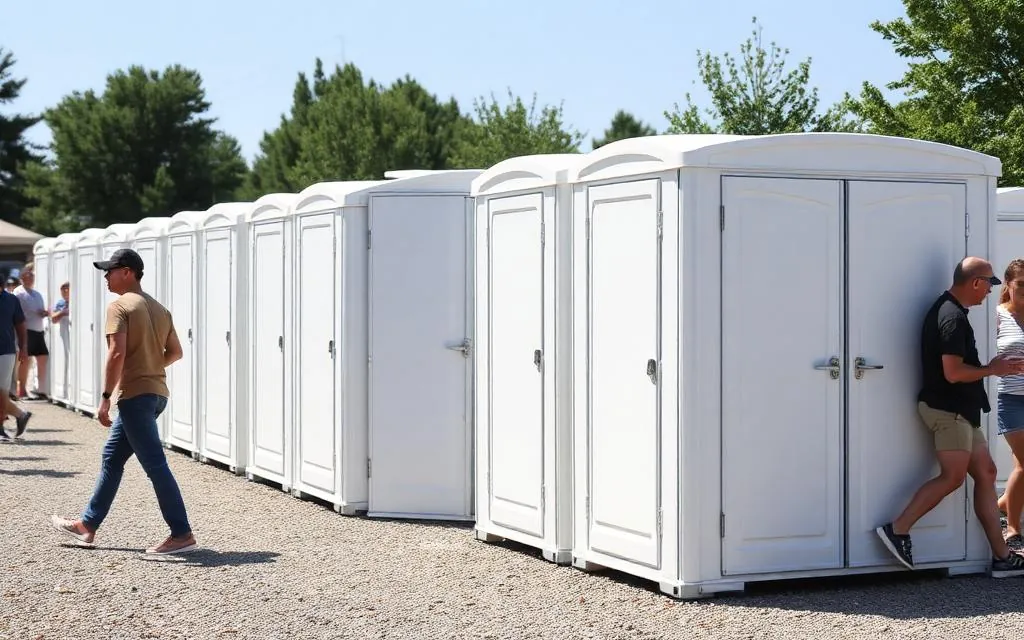
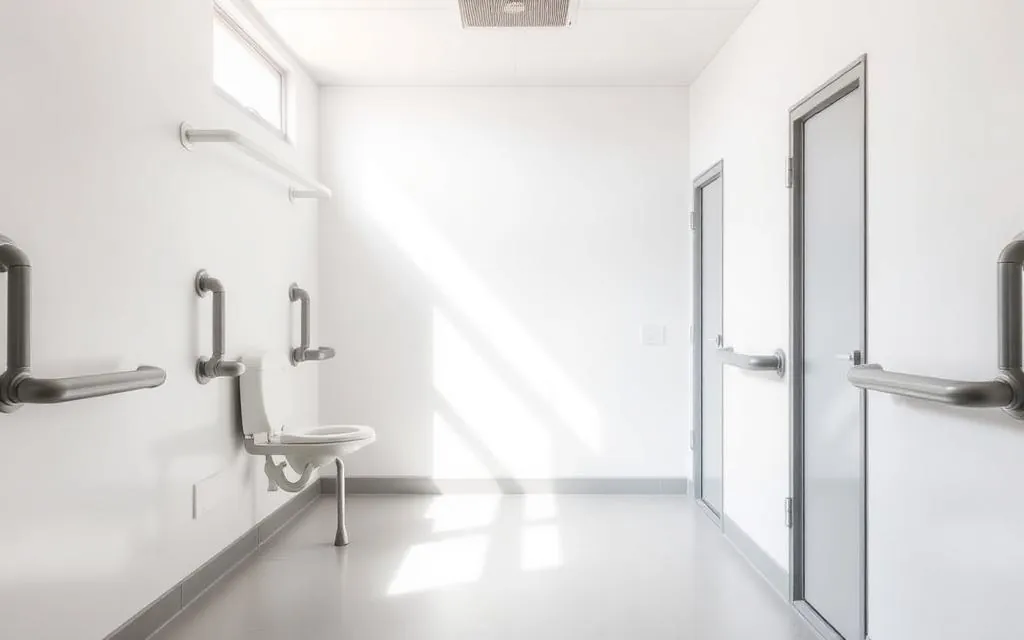
Guest count and reception length drive the number of stalls. Longer receptions with a bar need more capacity than a short afternoon ceremony, and an accessible unit should be part of the plan when guests need one.
Guest count scenarios
A ceremony-only event of two hours with a hundred guests needs meaningfully less capacity than a full evening reception with the same hundred guests, because the reception adds a bar, dinner, and hours of dancing on top of the ceremony itself. When in doubt, size for the reception portion of the day, since it is almost always the longer and higher-demand stretch. For guidance on translating a guest list into an exact unit count, our event sizing guide walks through the same math in more detail.
Common wedding planning mistakes
- Booking based only on the ceremony headcount and forgetting the reception runs longer with more demand.
- Choosing a placement spot before checking it against ceremony sight lines and photo locations.
- Waiting too long to reserve a luxury trailer during peak wedding season, when the limited trailer fleet books up first.
- Not accounting for an open bar's effect on restroom traffic later in the evening.
- Forgetting to loop in the venue coordinator on delivery timing and access, which can cause avoidable delays on setup day.
Talk It Through With Us
Every site and event is a little different. Call (605) 699-0189 or send us your details and we will give you a straight answer for your situation.